The Symbols of Fantasy
Fantasy worlds are built on symbols. Dragons, runes, ancient weapons, sacred circles — none of these elements exist by chance. They are visual shortcuts to meaning, power, fear, or hope. Long before fantasy became a genre, symbols were already shaping the way humans told stories and understood the unknown.
This article explores why symbols are at the very heart of fantasy, and why they continue to resonate so strongly today.

Why Symbols Matter in Fantasy
Symbols allow fantasy worlds to feel deep without needing long explanations. A single image can communicate history, danger, or mystery instantly. When we see a ruined sword, a glowing rune, or a dragon silhouette, we instinctively feel that it means something — even before knowing the story behind it.
Fantasy relies on this shared visual language. Symbols act as anchors between imagination and emotion. They help readers and viewers connect to worlds that do not exist, by using forms that feel ancient, familiar, and charged with meaning.
Dragons, Runes, and Recurring Motifs
Certain symbols appear again and again across fantasy worlds.
Dragons often represent power, chaos, wisdom, or guardianship. Sometimes they are threats, sometimes protectors, but they are never insignificant. Their presence alone reshapes the balance of a world.
Runes and sigils suggest knowledge, magic, and hidden systems. They imply that the world follows rules — rules that can be learned, mastered, or broken. Even unreadable symbols feel meaningful, as if they belong to an older language we have forgotten.
Sacred circles, relics, and artifacts often symbolize boundaries: between life and death, order and chaos, past and present. They mark places or objects where something important happened — or is about to happen.These motifs persist because they speak directly to intuition. We may not always know what they mean, but we feel their weight.
Roots in Myth and Folklore
Fantasy symbols did not appear out of nowhere. Most of them are inherited from myths, folklore, and ancient belief systems.
Before written stories, symbols were passed orally or visually. They were carved into stone, drawn on shields, or woven into rituals. Over time, these forms became associated with ideas such as protection, transformation, or divine power.
Modern fantasy draws heavily from these roots. Even when reimagined or stylized, the symbols retain their original force. This continuity is what gives fantasy its sense of timelessness — the feeling that these worlds existed long before we discovered them.
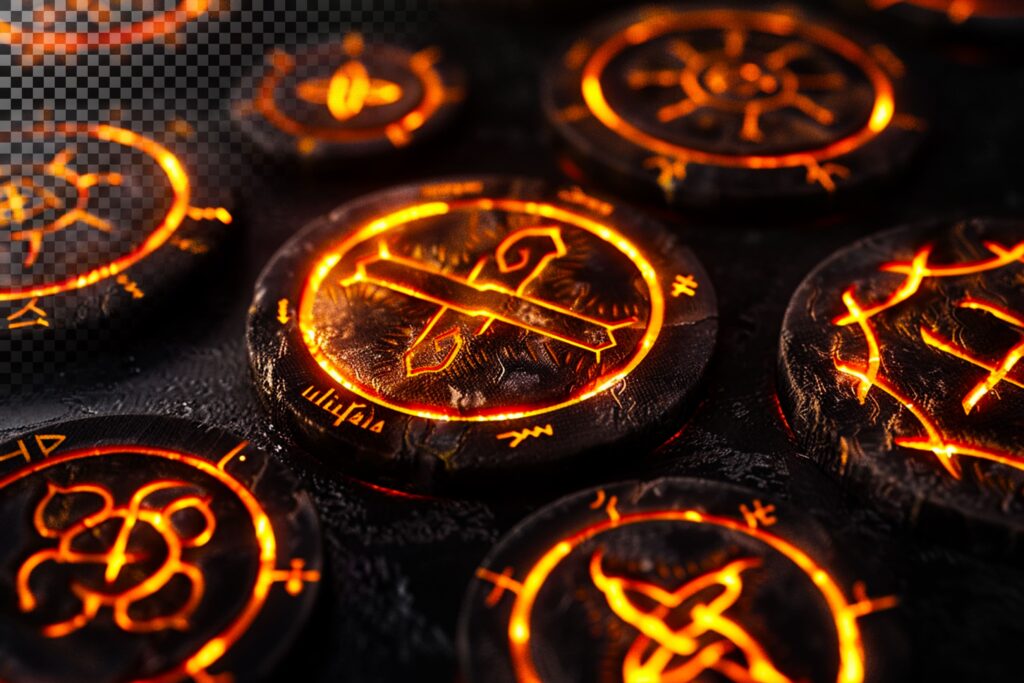
Symbols in Modern Fantasy Worlds
In books, games, films, and objects, symbols continue to shape fantasy aesthetics.
They help define factions, cultures, and identities. A single emblem can tell us who belongs where, who holds power, or who is forbidden. Symbols also guide emotional responses: comfort, fear, curiosity, reverence.
In modern fantasy design, symbols are often refined, minimal, or abstract — but their function remains the same. They give depth. They suggest unseen histories. They invite interpretation rather than explanation.
Why Symbols Still Resonate Today
In a world saturated with information, symbols offer something rare: silence and meaning. They do not explain themselves fully. They ask to be felt rather than decoded.
Fantasy symbols resonate because they slow us down. They create space for imagination. They remind us that not everything needs to be explicit to be powerful.
Whether found in a story, a game, or a physical object, symbols allow fantasy to exist beyond words. They turn imagination into something almost tangible — something we recognize without fully understanding.
Conclusion
Symbols are the foundation of fantasy. They connect modern worlds to ancient myths, emotion to imagination, and the visible to the unseen.
In fantasy, symbols are not decoration. They are language. And it is through this language that fantasy continues to speak to us — quietly, deeply, and across time.


